Teamwork and Collaboration
SUBTOPIC
Relation to Parent Topic
Teamwork and collaboration are essential social components of thriving in a work environment, as they require effective communication, cooperation, and the ability to navigate complex group dynamics. For autistic individuals, these skills can present unique challenges that impact their ability to engage fully in workplace activities.
Key Challenges
- Difficulty understanding non-verbal cues and body language, which can lead to misunderstandings with colleagues and management.
- Frustrations related to understanding expressions, sarcasm, and tone in verbal communication.
- Difficulties following proper emailing etiquette, and working on collaborative documents.
- Challenges in communicating ideas clearly and effectively in a group settings such as meetings.
- Sensory overload in the workplace, making it hard to concentrate and participate.
- Struggles with social dynamics, such as navigating hierarchy and interpersonal relationships within a team.
Strategies
- Use clear and direct communication, both in verbal and written forms, to reduce ambiguity.
- Foster a structured environment by establishing clear roles and responsibilities within the team.
- Implement regular check-ins and feedback sessions to ensure everyone is on the same page.
- Encourage the use of visual aids, like charts and diagrams, to support understanding and collaboration.
Examples
- An autistic team member successfully leads a project by creating a detailed project plan that outlines each person's responsibilities and deadlines.
- During a team brainstorming session, an autistic individual uses a shared digital whiteboard to visually present their ideas, which helps facilitate discussion.
- An autistic team member gives "weekly check ins" with rest of team, to check on their own progress, and understand more clearly their expectations moving forward
- A company implements a mentorship program where experienced employees guide autistic individuals in navigating team dynamics and collaboration.
- An autistic employee discusses their difficulties working in groups with management, leading to their being assigned roles that align more closely with their skills and limitations.
Action Steps
- Identify and communicate your preferred communication style to your team to help them understand how to engage with you effectively.
- Request accommodations such as a quieter workspace or the option to take breaks during high-stress team interactions.
- Practice role-playing common teamwork scenarios with a trusted colleague or mentor to build confidence and improve social skills.
- Set personal goals for participation in team meetings, such as contributing at least one idea or question per meeting to encourage engagement.
Resources

Identifying and Addressing Poor Teamwork
Explore common examples of poor teamwork, such as unclear roles and conflicts, and discover strategies to improve collaboration and project success. This resource is valuable for autistic professionals seeking to understand and navigate teamwork challenges in corporate settings.
https://examples-of.net/bad-teamwork-examples/
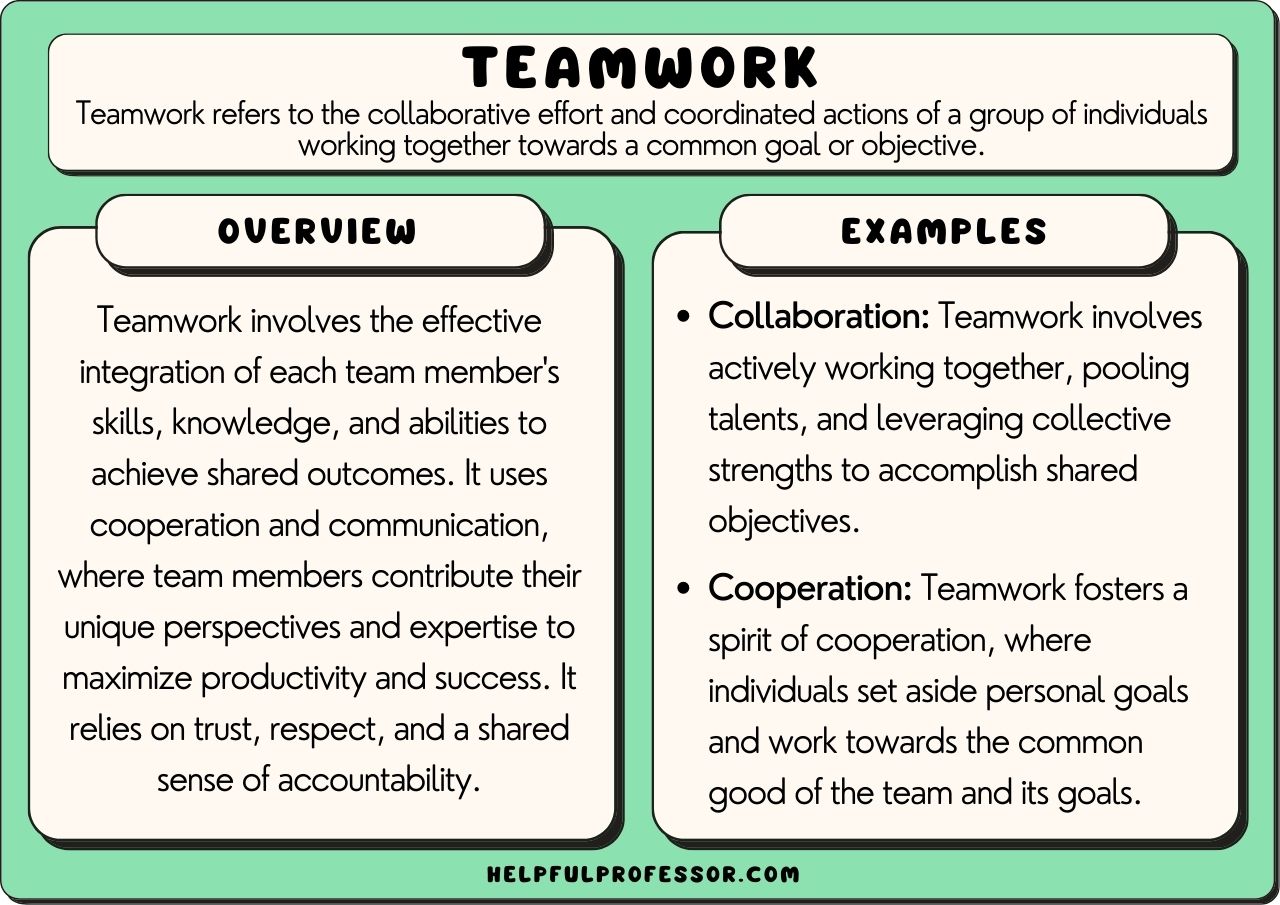
Effective Teamwork Strategies for Autistic Professionals
Explore 37 examples of effective teamwork, with practical breakdowns on how autistic professionals can practice and enhance their collaboration skills in corporate settings. This resource provides valuable insights into fostering clear communication, understanding team dynamics, and leveraging individual strengths to contribute effectively to team goals.
https://helpfulprofessor.com/teamwork-examples/

Enhancing Teamwork for Autistic Professionals
Explore effective teamwork strategies that emphasize communication, role clarity, and goal setting, tailored to support autistic professionals in corporate environments. This resource provides actionable tips to foster collaboration and respect for diverse personalities, enhancing productivity and team success.
https://www.aces.edu/blog/topics/finance-career/10-tips-for-effective-teamwork-in-the-workplace/